 Insurance Guides
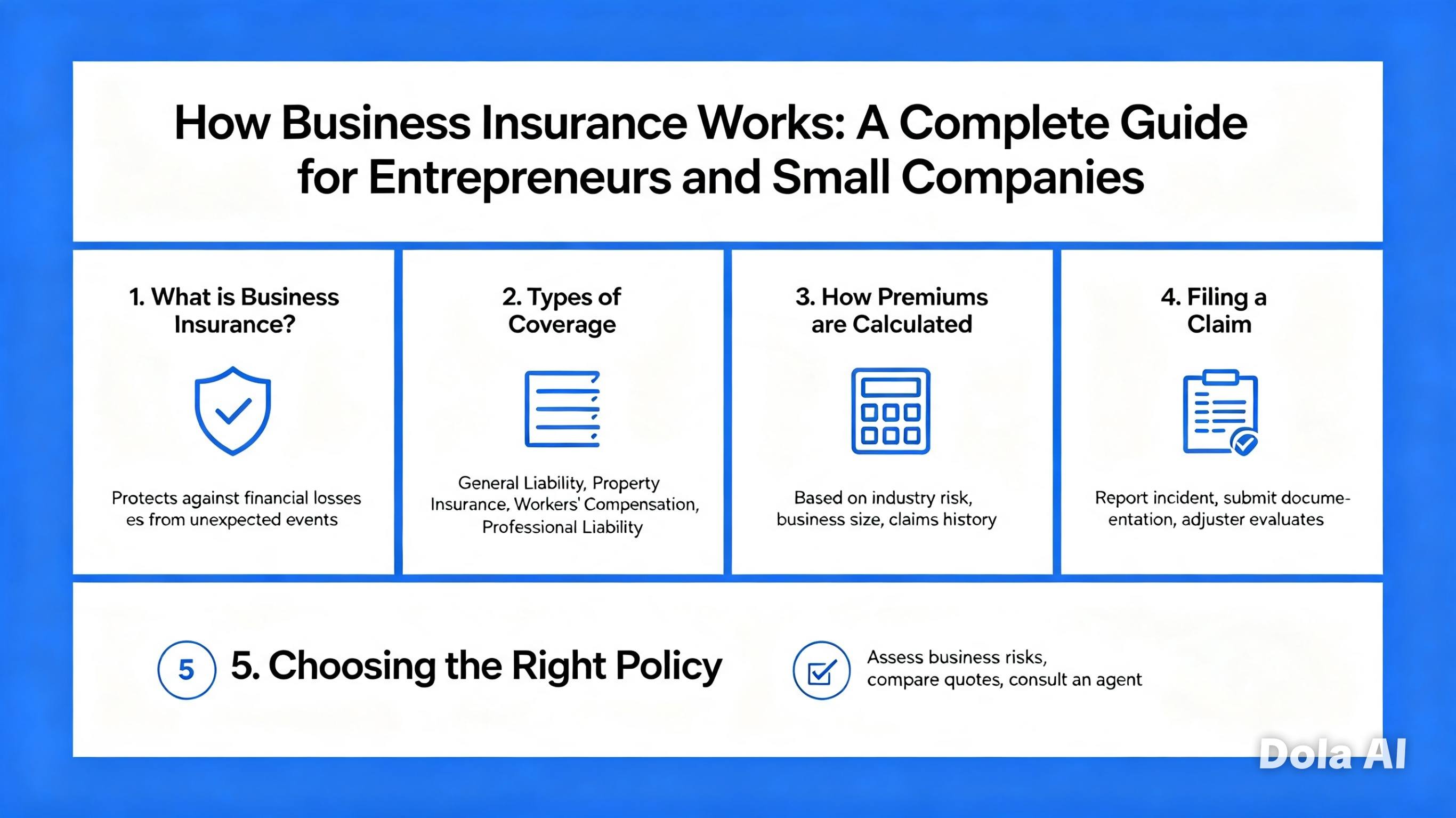
How Business Insurance Works: A Complete Guide for Entrepreneurs and Small Companies
Starting and managing a business involves many decisions, from creating products and finding customers to managing finances and employees. However, one of the most important decisions entrepreneurs must make is how to protect their company from unexpected risks.
Business insurance works as a financial protection system that helps companies recover from accidents, lawsuits, property damage, and other events that could create significant expenses.
Many business owners understand that insurance is important, but they do not always know how policies work, what they cover, or how insurance companies determine prices.
This guide explains the fundamentals of business insurance and how it helps companies operate with greater security.
What Is Business Insurance?
Business insurance is a type of financial protection designed specifically for companies.
It allows businesses to transfer certain risks to an insurance company by paying regular premiums. When a covered event happens, the insurer helps pay for eligible losses according to the terms of the policy.
Business insurance can protect against:
- Lawsuits
- Property losses
- Employee injuries
- Equipment damage
- Vehicle accidents
- Cyber threats
- Business interruptions
The purpose of insurance is not to prevent problems from happening, but to reduce their financial impact.
How Does Business Insurance Work?
The process of business insurance is based on risk sharing.
Thousands of businesses pay insurance premiums into a system managed by insurance companies. When one company experiences a covered loss, the insurer uses those collected funds to help pay for the claim.
The basic process includes:
- The business purchases an insurance policy.
- The company pays premiums.
- A covered event occurs.
- The business reports a claim.
- The insurer reviews the claim.
- The insurance company pays approved expenses.
This system allows businesses to handle large unexpected costs without using all of their available resources.
What Does Business Insurance Cover?
Business insurance coverage depends on the type of policy purchased.
Common protections include:
Liability Protection
Covers claims from third parties, such as:
- Customer injuries
- Property damage
- Legal disputes
- Advertising claims
Property Protection
Protects physical business assets, including:
- Buildings
- Equipment
- Inventory
- Furniture
- Technology
Employee Protection
Helps cover workplace-related risks, including:
- Employee injuries
- Medical expenses
- Lost wages
Income Protection
Business interruption insurance can help replace lost income when a company temporarily cannot operate due to a covered event.
Common Types of Business Insurance
General Liability Insurance
General liability insurance protects businesses from common accidents and lawsuits.
It is commonly purchased by:
- Retail stores
- Restaurants
- Contractors
- Service businesses
Commercial Property Insurance
Commercial property insurance protects company assets from covered damages.
It is important for businesses that own or lease physical locations.
Professional Liability Insurance
Professional liability insurance protects businesses that provide expert services.
It helps cover claims related to:
- Errors
- Professional mistakes
- Incorrect advice
Commercial Auto Insurance
Commercial auto insurance protects vehicles used for business activities.
It can cover:
- Company vehicles
- Delivery vehicles
- Work trucks
Cyber Insurance
Cyber insurance helps companies recover from digital security problems.
It may cover:
- Data breaches
- Cyberattacks
- Recovery expenses
How Are Business Insurance Premiums Calculated?
Insurance companies calculate premiums by evaluating the level of risk associated with a business.
Important factors include:
Industry Type
Different industries have different levels of risk.
For example:
A construction company may have higher premiums than a consulting business because physical work creates more accident risks.
Business Size
Larger businesses usually require more coverage because they have:
- More employees
- More assets
- Higher revenue
Location
Insurance costs can change depending on:
- Crime rates
- Weather conditions
- Property values
- Local regulations
Claims History
Businesses with many previous claims may receive higher premiums.
A strong safety record can help companies obtain better rates.
Business Insurance Deductibles Explained
A deductible is the amount a business pays before insurance coverage begins.
Example:
If a company has a $1,000 deductible and suffers a $10,000 covered loss, the business pays the first $1,000 and the insurer covers the remaining eligible amount.
Choosing a higher deductible can reduce premiums, but businesses should select an amount they can afford.
Business Insurance Policy Limits Explained
A policy limit is the maximum amount an insurance company will pay for covered claims.
Common limits include:
- Per occurrence limit
- Annual policy limit
- Property coverage limit
Businesses should choose limits based on their potential risks.
A company with expensive equipment or high customer exposure may require higher limits.
How to Choose Business Insurance Coverage
Choosing the right insurance requires understanding your company.
Consider:
Your Industry
Identify the risks specific to your field.
Your Business Assets
Determine the value of:
- Equipment
- Inventory
- Property
- Technology
Your Employees
Consider workplace risks and legal requirements.
Your Customers
Businesses that interact directly with customers often need stronger liability protection.
Ways to Reduce Business Insurance Costs
Companies can control insurance expenses by:
- Comparing multiple quotes
- Improving workplace safety
- Bundling policies
- Installing security systems
- Maintaining good records
- Preventing claims
Reducing risks is one of the best ways to obtain better insurance rates.
Common Business Insurance Mistakes
Not Having Enough Coverage
Insufficient insurance can leave businesses responsible for large expenses.
Buying Only the Cheapest Policy
The lowest price does not always provide the best protection.
Ignoring Cyber Risks
Modern businesses face increasing digital threats.
Not Reviewing Insurance Annually
Business operations change, and insurance coverage should change with them.
Frequently Asked Questions
Is business insurance necessary?
Yes. Most businesses face risks that can create significant financial losses.
How much business insurance does a company need?
The amount depends on industry, size, assets, and potential risks.
Can startups get business insurance?
Yes. Many insurers offer affordable options for new businesses.
Does business insurance cover everything?
No. Policies have limits and exclusions that businesses should understand.
The Bottom Line
Understanding how business insurance works helps entrepreneurs make smarter decisions about protecting their companies. Insurance provides financial security by reducing the impact of unexpected events such as lawsuits, accidents, property damage, and operational interruptions.
A well-designed insurance strategy allows businesses to focus on growth while having protection against the risks that come with operating a company. Choosing the right coverage, reviewing policies regularly, and managing risks effectively are essential steps toward building a stronger business future.
Comentarios (0)
Sé el primero en comentar.