 General Liability Insurance
General Liability Insurance: What Every Small Business Needs to Know
General Liability Insurance: What Every Small Business Needs to Know
Accidents can happen in any business. A customer may slip on a wet floor, an employee could accidentally damage a client's property, or a competitor might claim your advertisement infringes on their rights. General liability insurance is designed to protect your business from these common third-party claims and the potentially expensive legal costs that come with them.
For many small businesses, this is one of the most important insurance policies to purchase because it provides a financial safety net against lawsuits and unexpected liability claims.
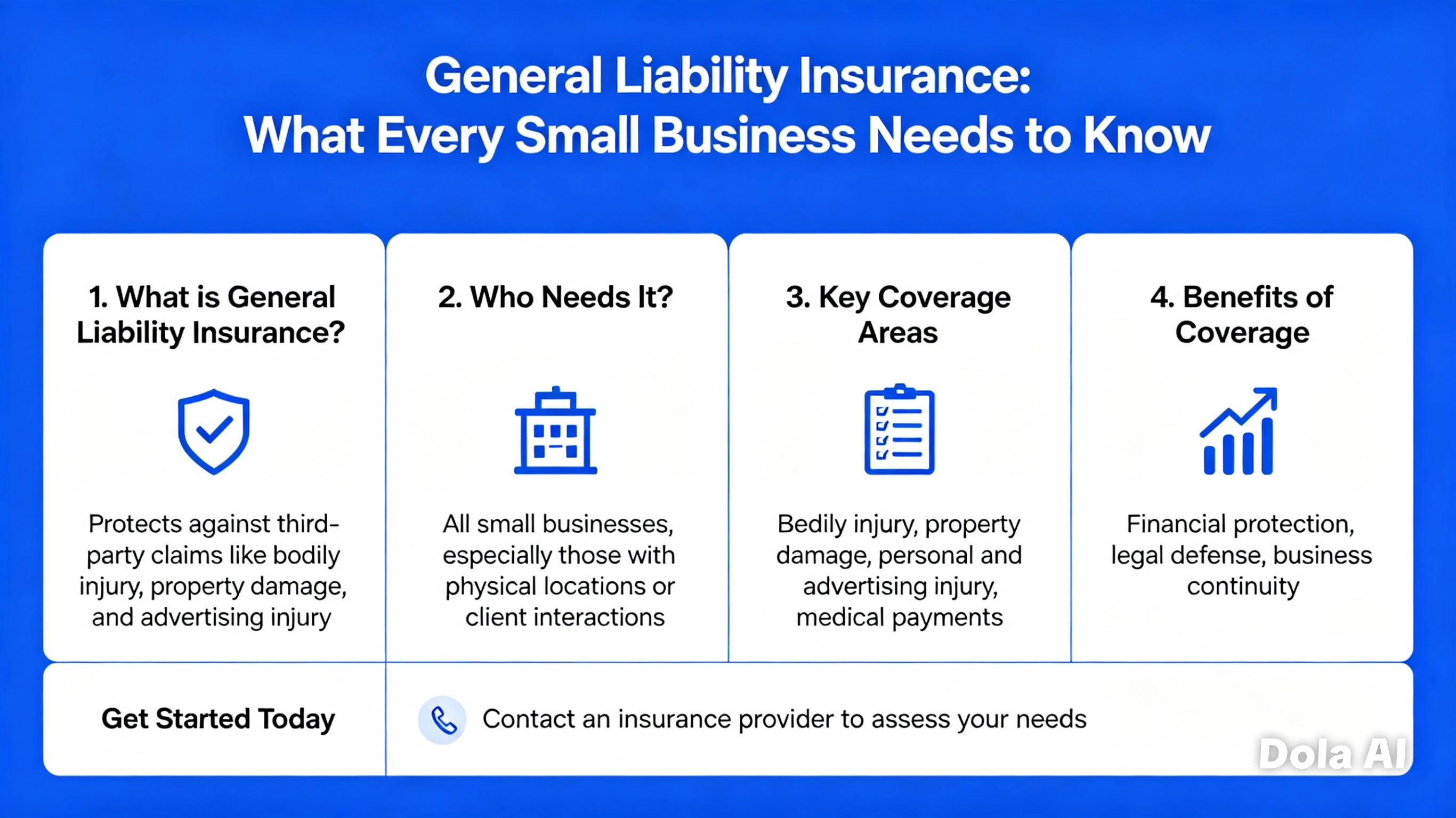
What Is General Liability Insurance?
General liability insurance, sometimes called commercial general liability (CGL) insurance, protects your business when a third party claims that your business caused bodily injury, property damage, or certain types of personal and advertising injury.
The policy typically covers:
- Customer injuries
- Damage to someone else's property
- Legal defense costs
- Court judgments or settlements
- Advertising and reputational claims
This coverage applies whether the incident occurs at your business location, at a client's property, or in some cases while performing work off-site.
What Does General Liability Insurance Typically Cover?
Bodily Injury
If a customer, vendor, or visitor is injured because of your business operations, the policy can pay for medical expenses, legal fees, and settlements.
Example: A customer slips on a recently mopped floor and suffers a broken wrist.
Property Damage
Covers damage your business causes to someone else's property.
Example: A contractor accidentally damages a client's flooring while installing equipment.
Personal and Advertising Injury
Protects against claims such as:
- Libel
- Slander
- Copyright infringement in advertising
- Misleading advertising
Legal Defense Costs
Even if a claim is unfounded, attorney fees and court costs can be substantial. General liability insurance usually pays these defense costs.
What Is Not Covered?
General liability insurance does not cover every type of business risk. Common exclusions include:
- Employee injuries (covered by workers' compensation)
- Professional mistakes or negligence (covered by professional liability insurance)
- Damage to your own business property
- Auto accidents involving business vehicles
- Intentional acts
- Cyberattacks and data breaches
Understanding these exclusions helps avoid dangerous coverage gaps.
Who Needs General Liability Insurance?
Almost every business should consider general liability coverage, including:
- Retail stores
- Restaurants
- Consultants
- Freelancers
- Contractors
- Cleaning services
- Salons and spas
- E-commerce businesses
- Real estate professionals
- Home-based businesses
Many landlords, clients, and government contracts require proof of general liability insurance before allowing you to operate or begin work.
How Much Does General Liability Insurance Cost?
Small businesses often pay between $300 and $1,200 per year for general liability insurance, though premiums can be higher for businesses with greater risk exposure.
Factors That Affect Cost
Business Type
A restaurant or construction company usually pays more than a consultant working from home.
Revenue
Higher sales often mean greater exposure to claims.
Number of Employees
More employees can increase operational risk.
Location
Insurance rates vary by state and local claim trends.
Coverage Limits
Higher limits increase premiums.
Claims History
Businesses with previous liability claims may pay more.
Typical Coverage Limits
A common policy structure is:
- $1 million per occurrence
- $2 million aggregate
This means the insurer may pay up to $1 million for a single claim and up to $2 million for all covered claims during the policy period.
General Liability vs. Professional Liability
These policies are often confused but protect different risks.
General Liability
Professional Liability
Customer injury
Professional errors
Property damage
Negligence claims
Advertising injury
Bad advice or services
Legal defense
Legal defense
A marketing consultant, accountant, or HR professional may need both policies.
How to Choose the Right Policy
Assess Your Risks
Think about how customers interact with your business and whether you work at client locations.
Check Contract Requirements
Landlords and clients may specify minimum coverage limits.
Consider a Business Owner's Policy (BOP)
Bundling general liability with commercial property insurance is often more cost-effective.
Review Exclusions
Make sure the policy fits your industry and operations.
Compare Quotes
Look at coverage details, not just price.
Ways to Reduce Premiums
You may lower costs by:
- Maintaining a safe workplace
- Using written contracts
- Training employees on safety procedures
- Installing security systems
- Bundling insurance policies
- Choosing a higher deductible
Frequently Asked Questions
Is general liability insurance legally required?
Usually no, but certain industries, contracts, or leases may require it.
Does it cover independent contractors?
Typically not unless they are specifically included in the policy.
Does it cover online businesses?
Yes, many online businesses can still face advertising injury or third-party claims.
Is it tax deductible?
Business insurance premiums are generally deductible as a business expense in many jurisdictions; consult a tax professional for advice specific to your situation.
The Bottom Line
General liability insurance is often the first insurance policy a small business should buy. It protects against some of the most common and costly third-party claims, including customer injuries, property damage, and advertising-related lawsuits. A single accident or legal claim can create expenses far greater than the annual premium, making this coverage a foundational part of protecting your business, reputation, and long-term financial stability.
Comentarios (0)
Sé el primero en comentar.